
Are TheSeniorList Alternatives Better for Caregivers?
Last Updated: October 25, 2026
Quick Summary
TheSeniorList alternatives for caregivers fill gaps a review and directory site does not cover, such as care planning, Medicaid guidance, and cost research by state. Match each resource to your question: Caregiverlist for training, All Seniors Foundation for elder law advisors, and A Place for Mom or CareScout for cost estimates. None of these replace a licensed professional.
- TheSeniorList is a review and directory resource, not a care-planning service, legal advisor, or cost calculator.
- Caregiverlist combines care-planning information with caregiver training resources and job listings.
- All Seniors Foundation connects caregivers with elder law and Medicaid planning advisors at no cost for the connection.
- CareScout compares median long-term-care costs by state and care type through a free tool.
- Many AAA and Medicaid home- and community-based programs have waitlists, so apply before you need the service.
Table of Contents
- Why Caregivers Look Beyond TheSeniorList
- TheSeniorList Alternatives for Caregivers: Quick Comparison
- Senior Care Resources for Caregivers: What Each Option Does Best
- Caregiver Support Resources: Where to Find Help and Guidance
- Senior Care Product Reviews: What to Look For in an Independent Source
- Assisted Living Alternatives: Comparing Care Options With These Resources
- How to Choose the Right Resource for Your Caregiving Situation
- Start Your Caregiving Research With ElderLivingHub
- Frequently Asked Questions
Why Caregivers Look Beyond TheSeniorList
Caregivers searching for TheSeniorList alternatives for caregivers usually start with a practical problem: they need help now, and a directory of facility listings does not answer the question they are actually asking. TheSeniorList built its reputation on senior living and technology reviews, but many families arrive at it with needs that stretch past a review site’s scope, such as care planning, legal questions, or cost research by state. (Source: the U.S. Department of Health and Human Services)
At ElderLivingHub, we hear this constantly from adult children managing a parent’s care from three hours away. A review of a medical alert system is useful. A review does not tell you whether your mother qualifies for Medicaid long-term care support, or what in-home care actually costs in her state, or where to find caregiver training before you burn out.
That gap is the real story here. TheSeniorList alternatives are not better or worse in a single ranking. They serve different jobs.
TheSeniorList is a review and directory resource; it is not a care-planning service, a legal advisor, or a cost calculator. Families who expect it to do all four end up frustrated. Below, we compare the alternatives that fill each gap, with evaluation criteria, access guidance, and cost context so you can match the resource to your situation.
TheSeniorList Alternatives for Caregivers: Quick Comparison
TheSeniorList is best understood as a review and directory site for senior living and senior technology. Caregivers often arrive expecting it to also plan care, screen Medicaid eligibility, or coordinate providers. It does not do those jobs.
| Resource | Primary caregiver job | Cost to use | Access model | What to have ready |
|---|---|---|---|---|
| ElderLivingHub | Independent product reviews and buying guides for medical alerts, smart home monitoring, and home safety | Free to read | Self-serve online | A short list of products you are considering and the senior’s tech comfort level |
| Caregiverlist | Caregiver training information and care-planning content, plus job listings | Free to browse; training and job costs vary by provider | Self-serve online | The specific care tasks you need to learn (bathing, transfers, medication reminders) |
| All Seniors Foundation | Connection to elder law and Medicaid planning advisors | Free advisor connection; legal fees set by the advisor | Advisor call | Income, assets, marital status, state of residence, and current care needs |
| A Place for Mom | In-home care cost research and referral to local providers | Free to families; providers pay for referrals | Advisor call or online guide | Parent’s ZIP code, hours of care needed per week, and budget range |
| CareScout | Median long-term-care cost comparison by state and care type | Free tool | Self-serve online | State, care type (in-home, assisted living, memory care, skilled nursing), and level of care |
Two practical notes. First, “free” usually means the caregiver does not pay; the resource is funded by providers, advertisers, or referral fees, so ask how the organization is paid before you share personal information. Second, none of these replace a licensed professional.
Before you call any advisor-based resource, write down three things: the parent’s current living situation, the care tasks they cannot do safely alone, and the monthly amount the family can spend without liquidating assets. Those three answers determine which resource is actually useful.
Senior Care Resources for Caregivers: What Each Option Does Best

Each option below earns its place for a specific caregiver need. We do not rank them against each other, because a training resource and a cost calculator are not substitutes.
Caregiverlist: Training and Care-Planning in One Place
Caregiverlist combines senior-care planning information with caregiver training resources and job listings. It is the option we point families toward when the caregiver, not the parent, needs support. If you are learning to provide personal care or want to understand care options before committing, this is a reasonable starting point. The limitation: the available information does not detail monitoring features or pricing, so treat it as a planning resource rather than a product guide.
All Seniors Foundation: Advisors for Elder Law and Medicaid Planning
All Seniors Foundation connects caregivers with advisors who specialize in elder law and Medicaid planning. This matters because long-term care financing is where most families get stuck. A common mistake is assuming Medicare covers custodial care; it generally does not, and Medicaid rules vary by state (Long Term Care Coverage). We recommend verifying any eligibility detail with your state’s Medicaid agency and a licensed elder law attorney before making decisions.
A Place for Mom and CareScout: Cost Research Tools
These two tools answer the budgeting question. A Place for Mom publishes an in-home care cost guide with national and state median figures, and CareScout lets you compare median long-term-care costs by state and care type, including assisted living, in-home care, and memory care.
What most guides miss is that these are cost-estimate tools, not care coordination platforms. Use them to set a budget range, then confirm actual quotes locally.
Caregiver Support Resources: Where to Find Help and Guidance
1. Emotional support and peer groups. The Alzheimer’s Association runs a 24/7 Helpline (800-272-3900) and local support groups for dementia caregivers (24/7 Helpline: 1.800.272.3900).
**2. For home setup, see this guide to senior safety technology for home covering costs, privacy, and setup support.
**3.
4. Care coordination. A geriatric care manager (also called an aging life care professional) can coordinate providers, attend medical appointments, and manage crises for a hourly or flat fee.
A common mistake is waiting for a crisis before applying for support. Many AAA and Medicaid home- and community-based programs have waitlists, so start the application before you need the service. Keep a folder with the parent’s Social Security number, Medicare and insurance cards, income and asset statements, and a list of medications; most applications ask for the same documents.
For a practical next step on home setup, our senior home safety assessment checklist walks through fall hazards and room-by-room modifications.
Senior Care Product Reviews: What to Look For in an Independent Source
An independent review source should disclose how it evaluates products, who writes the reviews, and whether it earns commissions. Those three disclosures separate a genuine review from a sales page.
When judging any senior care product review, ask:
- Does the review explain ease of use for someone over 80 who barely uses email?
- Does it break down total cost of ownership, including equipment fees and hidden charges?
- Does it address setup and troubleshooting for a remote caregiver?
- Is the information current?
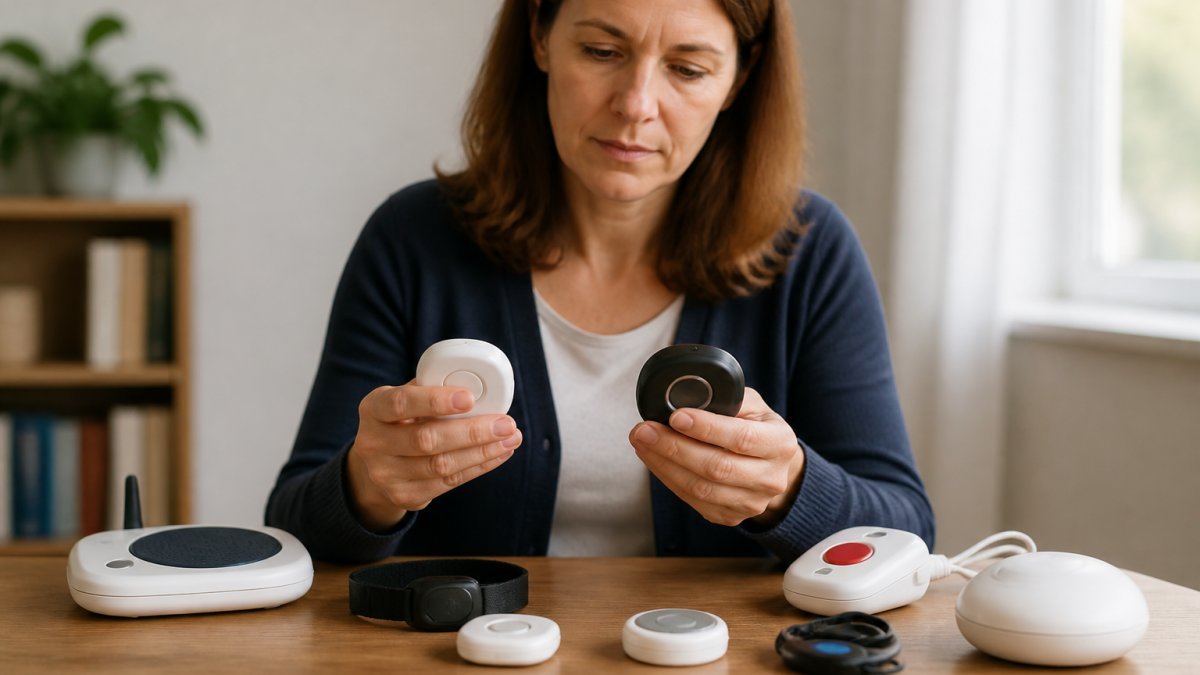
This is where ElderLivingHub focuses. Our reviews examine medical alert systems and smart home monitoring with an eye on how a real senior and a remote family member will actually use them. If you want to judge review platforms side by side, our guide to independent senior technology reviews explains what to trust.
Assisted Living Alternatives: Comparing Care Options With These Resources
Assisted living is one option among many, and the alternatives deserve equal weight. The main care alternatives are:
- Aging in place with in-home care, using home care aides and medical alert systems
- Independent living communities for seniors who need little daily support
- Residential care homes and board-and-care homes for a homelike setting
- Memory care for dementia-related needs
Each carries a different level of care and cost. Comparing them honestly starts with an accurate picture of your parent’s daily living support needs. Our guides to assisted living, memory care, and nursing home options explain each category and connect families to referral resources.
How to Choose the Right Resource for Your Caregiving Situation
Match the resource to the question, not the other way around. Use this decision framework:
- If you need product guidance for safety and monitoring, start with an independent review source.
- If you need training to provide care, use a caregiver training resource.
- If you need legal or Medicaid planning, connect with an elder law advisor.
- If you need cost estimates, use a state-level cost comparison tool.
- If you need care options explained, use a category guide.
Watch out: choosing a resource because it ranks first, rather than because it answers your question, wastes the limited time you have. For families ready to act, our senior living technology buying guide covers medical alerts, smart home devices, and privacy considerations in one place.
Start Your Caregiving Research With ElderLivingHub
The hardest part of caregiving research is not finding information. It is finding information that answers your specific question without a sales pitch attached.
ElderLivingHub exists to close that gap. We provide expert, independent product reviews, family-focused content written for adult children, and analysis of pricing and total cost of ownership.
Get started with ElderLivingHub and find the right resource for your family’s situation today.
Frequently Asked Questions
What is TheSeniorList, and who is it for?
TheSeniorList is a senior care resource that publishes reviews of products and services for older adults and their families. It covers categories such as medical alert systems, senior living communities, and in-home care. Caregivers often use it as a starting point for comparing options, but some find its coverage too broad for specific situations like remote caregiving or dementia care. That is why many families look at TheSeniorList alternatives for caregivers that focus more narrowly on caregiver needs.
What are the best alternatives to TheSeniorList for caregivers?
Caregiverlist offers care-planning resources and caregiver training. All Seniors Foundation connects families with advisors for elder law and Medicaid planning. A Place for Mom publishes in-home care cost guides with national and state medians, and CareScout lets you compare median long-term-care costs by state and care type. ElderLivingHub focuses on independent reviews of senior care technology, including medical alert systems and smart home monitoring, with an emphasis on ease of use for seniors and remote caregivers.
Where can caregivers find reliable senior care product reviews?
Look for sources that explain how they test products, disclose their funding model, and evaluate ease of use for both seniors and remote caregivers. ElderLivingHub reviews senior care technology with a focus on practical functionality and total cost of ownership. When reading any senior care product reviews, check whether the review covers setup difficulty, monthly fees, and what happens if the user has limited tech experience, since those factors often determine whether a device actually gets used.
Are there alternatives to TheSeniorList for comparing assisted living options?
Yes. CareScout provides a cost-comparison tool covering assisted living, in-home care, and memory care by state. A Place for Mom publishes cost guides that help families budget before touring communities. Caregiverlist also lists care options including nursing homes. When comparing assisted living alternatives, ask each resource whether its cost figures are medians or ranges, how recently the data was updated, and whether it covers the specific care level your parent needs.
What should caregivers look for in a senior care resource?
Prioritize resources that match your specific situation: remote caregiving, dementia care, or cost planning. Check whether the site explains its evaluation method, how current its information is, and whether it offers caregiver support resources like training or advisor connections. Cost transparency matters too, since hidden fees in monitoring plans add up. A good resource helps you compare options side by side and points you to official sources for legal or Medicaid questions rather than guessing.
The challenge is not a lack of senior care resources. It is matching the right one to your parent’s needs before a crisis forces the decision. ElderLivingHub helps you compare care options and technology with independent reviews, transparent evaluation of ease of use, and clear cost analysis. Get started with ElderLivingHub and make your next care decision with confidence.