
Senior Home Safety Assessment Checklist
Table of Contents
- What Is a Home Safety Assessment for Older Adults?
- Why a Senior Home Safety Assessment Matters
- Room-by-Room Home Safety Checklist
- Home Safety Checklist for Dementia
- Conducting a Professional Home Safety Assessment
- Printable Home Safety Checklist for Older Adults
- Prioritizing Repairs and Modifications by Risk Level
- Frequently Asked Questions
Last Updated: October 11, 2026
What Is a Home Safety Assessment for Older Adults?
A home safety assessment is a systematic review of your living space to identify hazards that could cause falls, injuries, or other accidents. We help families understand what this process involves and why it matters for aging in place safely. (Source: the CDC)
The goal is simple: spot risks before they become injuries. A professional or trained family member walks through the home, documents problems, and creates a prioritized action plan for repairs and modifications. This isn’t about making the home look clinical or removing independence.
Why a Senior Home Safety Assessment Matters
Falls are the leading cause of both fatal and nonfatal trauma among older adults (the CDC). A single fall can result in broken bones, hospitalization, and loss of independence. Many of these falls happen at home, in familiar spaces where people feel safest.
The good news: most fall hazards are preventable.
A home safety assessment identifies these risks early:
- Loose rugs and clutter that cause trips
- Stairs without handrails
- Bathrooms without grab bars
- Poor lighting in hallways and bedrooms
- Slippery flooring
- Unsecured electrical cords
Beyond physical safety, an assessment addresses medication management, cognitive changes, and mobility limitations. Someone with early dementia needs different modifications than someone recovering from hip surgery. An assessment tailored to the individual catches these nuances.
The real value of a home safety assessment is preventing the cascade: a fall leads to hospitalization, which leads to loss of confidence, which leads to isolation and decline. Catching hazards early stops that spiral.
Room-by-Room Home Safety Checklist
A comprehensive home safety assessment covers every space where your older adult spends time. Use this room-by-room checklist to identify hazards in your own home.
Entryways and Exterior Access
The front and back entrances are the first place to assess. Poor exterior conditions create immediate hazards.
Check for:
- Broken or uneven steps and walkways
- Missing or loose handrails
- Overgrown shrubs blocking pathways
- Inadequate house numbers (hard to see in emergencies)
- Poor outdoor lighting near doors
- Slippery surfaces when wet
- Doors that are hard to open
Secure the entry. Add handrails on both sides of steps if possible. Trim vegetation so it doesn’t obstruct the path. Install motion-activated lighting so older adults don’t fumble with switches in darkness.
Stairs and Steps
Stairs are high-risk zones. Many falls happen on staircases, especially when older adults rush or have vision problems.
Evaluate:
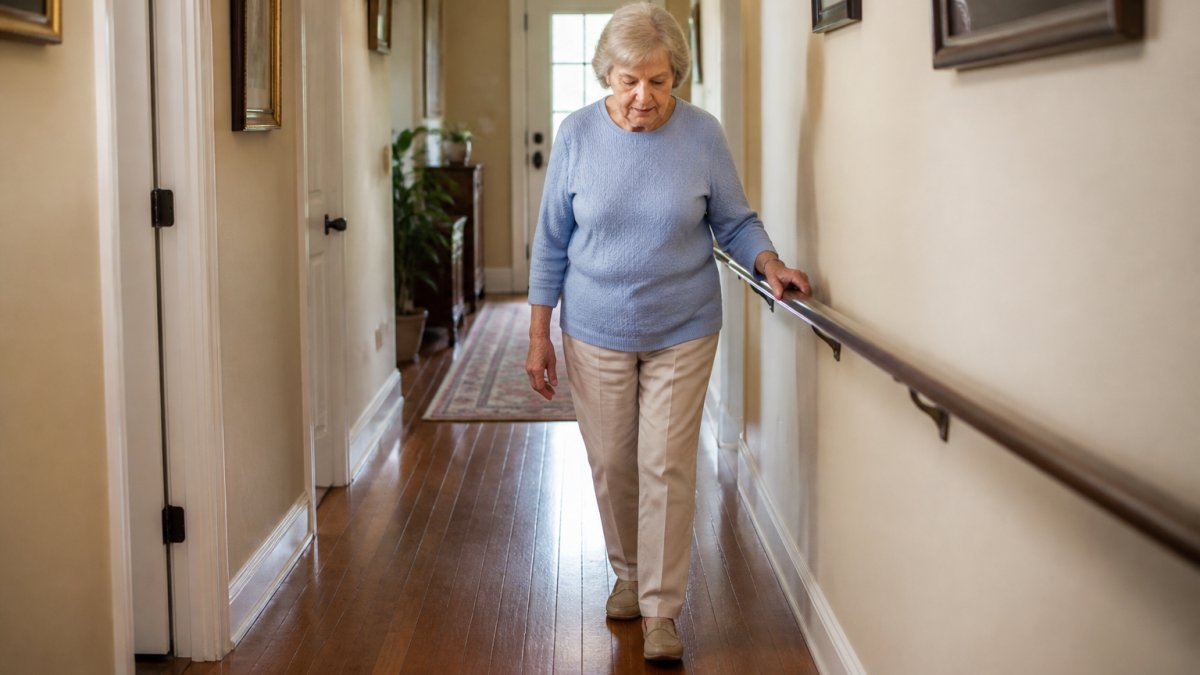
- Handrails on both sides (not just one)
- Secure, non-slip treads on each step
- Adequate lighting on every step
- Clear visibility of step edges (consider contrasting tape)
- No clutter on stairs
- Sturdy bannister that supports weight
Install handrails if missing. Add non-slip tape to treads. Place a light switch at the top and bottom of stairs so users don’t navigate in darkness. If stairs are a significant barrier, consider a stair lift for someone with mobility issues.
Bathroom Safety
Bathrooms are where many senior falls occur. Wet surfaces, hard edges, and slippery floors create dangerous conditions.
Check for:
- Grab bars near toilet and tub or shower
- Non-slip mat in tub or shower
- Adequate lighting around toilet and sink
- Secure toilet seat (not wobbly)
- Clear pathways (no clutter)
- Easy-to-reach soap and towels
- Temperature controls to prevent scalding
- Step stool if needed to reach items
Install grab bars rated for 300+ pounds. Use bars, not towel racks. Add non-slip strips to the tub floor. Keep a nightlight in the bathroom so older adults can find their way during nighttime trips without turning on bright overhead lights.
A common mistake is installing towel bars and calling them grab bars. Towel bars are not designed to support body weight and can pull away from the wall. Real grab bars are anchored to studs and rated for safety. This difference can mean the difference between a stable grip and a fall.
Bedroom Safety and Nighttime Access
Bedrooms should support safe nighttime movement. Many falls happen when older adults get up during the night to use the bathroom.
Evaluate:
- Clear pathway from bed to door
- Nightlight or bedside lamp within reach
- Secure bed frame (not wobbly)
- Appropriate bed height (not too low or high)
- Non-slip slippers or shoes nearby
- Telephone within reach of bed
- No clutter or obstacles on floor
Keep a nightlight plugged in so the path to the bathroom is visible. Position the bed so the older adult can get up without stepping over obstacles. Remove throw rugs that can catch feet. A cordless phone or mobile phone on the nightstand helps if they need to call for help.
Kitchen Safety
Kitchens involve heat, sharp objects, and heavy items. Cognitive changes or mobility issues can make cooking more hazardous.
Check for:
- Clear, unobstructed pathways
- Easy-to-reach frequently used items
- Non-slip flooring or mats
- Adequate lighting near stove and counters
- Stable step stool if needed
- Labels on medications stored in kitchen
- Clear sight lines (no blind spots at stove)
- Functioning smoke and carbon monoxide detectors
Reorganize cabinets so daily items are at waist height. Remove clutter from counters and floors. Install under-cabinet lighting for better visibility. Keep a fire extinguisher accessible. If cognitive changes are present, consider removing access to the stove or using a stove guard. (Source: National Institute on Aging)
Lighting and Visibility
Poor lighting is one of the most overlooked fall hazards. Older adults need more light to see clearly than younger people do.
Assess:
- Light switches accessible from each room entrance
- Adequate brightness in hallways and stairways
- Nightlights in bedrooms and bathrooms
- No dark corners or shadows
- Glare from windows (can reduce visibility)
- Lamp placement to avoid tripping on cords
Add more light fixtures than you think necessary. Install switches at both ends of hallways. Use bulbs with higher wattage. Remove heavy curtains that block natural light. Motion-activated lights work well in bathrooms and hallways so older adults don’t fumble for switches.
Flooring, Rugs, and Clutter
Tripping hazards on floors are responsible for many falls. This is one of the easiest categories to improve.
Check for:
- Loose or worn carpet
- Throw rugs that can shift underfoot
- Electrical cords crossing pathways
- Clutter on floors
- Uneven transitions between rooms
- Slippery hard flooring
- Broken tiles or gaps
Remove throw rugs entirely or secure them with non-slip mats. Tape down electrical cords along walls. Clear floors of toys, books, and other items. Use non-slip mats on hard flooring in kitchens and bathrooms. Consider replacing worn carpet or using non-slip floor treatments.
Home Safety Checklist for Dementia
Older adults with dementia or cognitive decline need additional modifications beyond standard fall prevention. Memory loss, confusion, and impulsive behavior create unique safety challenges.
Dementia-specific hazards include:
- Wandering out of the home
- Forgetting to turn off stove or lights
- Confusion about medication timing
- Inability to call for help
- Getting lost in familiar spaces
- Unsafe responses to strangers
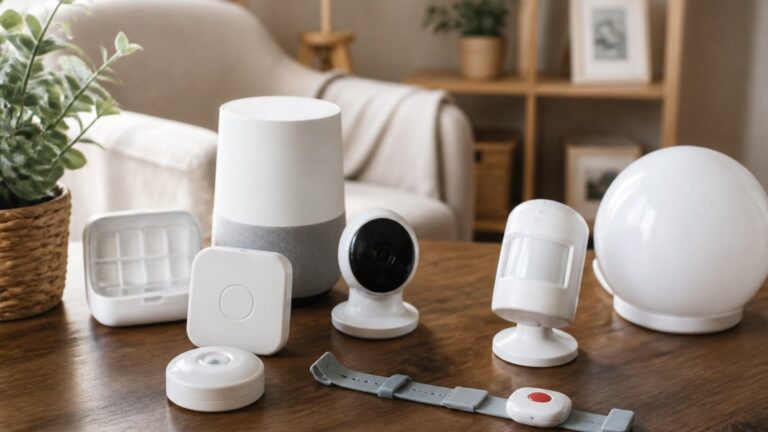
Lock doors and windows to prevent wandering. Install door alarms that alert caregivers if someone leaves. Remove or hide medication to prevent accidental overdose. Install a GPS tracker in a watch or shoe.
A home safety assessment for dementia is more restrictive than for other older adults.
Conducting a Professional Home Safety Assessment
While family members can perform a basic assessment using a checklist, a professional brings expertise that catches subtle hazards. Professionals include occupational therapists, aging-in-place specialists, and home modification contractors.
A professional assessment typically includes:
- Detailed walkthrough of every room
- Evaluation of mobility and balance
- Assessment of cognitive and sensory changes
- Recommendations for modifications
- Cost estimates for repairs
- Prioritization by risk level
- Follow-up to verify changes were made
Occupational therapists are especially valuable because they understand how physical limitations affect daily activities. They can recommend modifications tailored to specific diagnoses like arthritis, vision loss, or balance problems.
Find professionals through your local Area Agency on Aging or your older adult’s healthcare provider.
Professional assessments often reveal hazards family members miss because they see the home through the lens of “this is how we’ve always done it.” A fresh set of eyes catches problems that have become invisible through familiarity.
Printable Home Safety Checklist for Older Adults
Use this checklist to document hazards in your home. Print it and walk through each room with a pen, checking off problems as you find them.
| Room | Hazard | Present? | Priority |
|---|---|---|---|
| Entryway | Broken steps or uneven walkway | Yes / No | High / Medium / Low |
| Entryway | Missing or loose handrails | Yes / No | High / Medium / Low |
| Stairs | Handrails on both sides | Yes / No | High / Medium / Low |
| Stairs | Non-slip treads | Yes / No | High / Medium / Low |
| Bathroom | Grab bars near toilet and tub | Yes / No | High / Medium / Low |
| Bathroom | Non-slip mat in tub | Yes / No | High / Medium / Low |
| Bedroom | Clear pathway to door | Yes / No | Medium / Low |
| Kitchen | Non-slip flooring | Yes / No | Medium / Low |
| Throughout | Throw rugs that shift | Yes / No | High / Medium / Low |
| Throughout | Clutter on floors | Yes / No | Medium / Low |
| Throughout | Poor lighting | Yes / No | High / Medium / Low |
| Throughout | Electrical cords crossing pathways | Yes / No | High / Medium / Low |
Print this checklist and share it with family members, caregivers, or a professional assessor. Update it every six months as conditions change.
Prioritizing Repairs and Modifications by Risk Level
Not all hazards are equally urgent. Prioritize by likelihood of injury and severity of potential harm.
High Priority (address immediately):
- Missing handrails on stairs
- Broken steps or severely uneven walkways
- Grab bars missing in bathroom
- Poor lighting on stairs or in hallways
- Throw rugs that shift underfoot
- Clutter blocking pathways
- Slippery bathroom floors
Medium Priority (address within 1-2 months):
- Loose carpet or worn flooring
- Inadequate lighting in living areas
- Electrical cords crossing pathways
- Hard-to-reach frequently used items
- Doors that are difficult to open
- Temperature controls that are hard to adjust
Low Priority (address within 3-6 months):
- Overgrown exterior vegetation
- House numbers that are faded
- Worn door handles or locks
- Cosmetic improvements like paint or new fixtures
- Non-essential storage reorganization
Start with high-priority items. Many are inexpensive. These small changes prevent the majority of falls.
Frequently Asked Questions
What should be included in a senior home safety assessment?
A comprehensive senior home safety assessment covers fall hazards, lighting, flooring, stairs, handrails, grab bars, bathroom safety, bedroom access, kitchen appliances, electrical cords, locks, and outdoor walkways. The assessment should identify trip hazards like throw rugs and clutter, check visibility in all rooms, inspect for broken steps or uneven surfaces, and evaluate whether grab bars and handrails are secure and properly positioned. Personalization for mobility, cognition, and medication effects is essential.
How do you assess a home for fall risks?
Start by walking through each room and identifying potential trip hazards: loose rugs, electrical cords, clutter, and uneven flooring. Check stairs for secure handrails on both sides, adequate lighting, and non-slip treads. Inspect bathrooms for grab bars near toilets and tubs, non-slip mats, and adequate lighting. Evaluate bedroom pathways to the bathroom and bedside lighting. Look at kitchen layout for safe appliance use and clear walkways. Test door locks, window locks, and ensure house numbers are visible. Document each hazard with its location and risk level.
When should a caregiver arrange a professional home safety assessment?
A professional assessment is recommended after a fall, when mobility or cognition changes, before aging in place modifications, or when family caregivers lack confidence in identifying hazards. Occupational therapists and certified aging-in-place specialists conduct thorough evaluations and provide specific modification recommendations. Consider professional assessment if the older adult has dementia, multiple chronic conditions, uses mobility aids, or if the home is complex (multiple levels, older construction). Professional assessors can identify hazards family members might miss and prioritize modifications by risk level.
Does Medicare cover home safety assessments?
Medicare may cover occupational therapy home evaluations when ordered by a physician as part of a treatment plan following hospitalization or injury. Coverage depends on the specific situation and whether the assessment meets medical necessity criteria. Private insurance coverage varies. Many families pay out-of-pocket for professional assessments, which typically range in cost depending on the provider and scope. Contact your insurance provider or consult with your healthcare team about coverage options for a home safety evaluation.
A home safety assessment isn’t a one-time event. Mobility changes, new diagnoses, and seasonal hazards mean reassessing every six months. ElderLivingHub guides you through this process with detailed checklists, professional resources, and practical modification strategies. Start with the room-by-room checklist above, identify your highest-risk areas, and tackle them systematically. Your older adult’s safety and independence depend on a home environment designed for their needs.