
How to Choose a Vayyar Care Sensor for Aging in Place
Last Updated: November 12, 2026
Quick Summary
Vayyar Care is a wall-mounted sensor that uses radio-frequency sensing to detect falls and track activity without cameras or wearables. Choose it by matching one sensor per room to the highest-risk spaces, like the bedroom and bathroom, then confirming pricing, installation, and your alert response plan.
- A single sensor covers one room, so plan coverage room by room.
- Radar sensing captures no images or sound, protecting privacy in bedrooms and bathrooms.
- Ask vendors for detection accuracy and false-alarm evidence before committing.
- Request an all-in 24-month and 60-month total in writing before signing.
- Alerts need a response plan because the system does not dispatch responders.
Table of Contents
- What the Vayyar Care Sensor Actually Does
- Vayyar Care Fall Detection: Accuracy, Alerts, and False Alarms
- Vayyar Care Cost: Subscription, Installation, and Total Cost of Ownership
- Vayyar Care Pros and Cons for Families and Care Facilities
- How Vayyar Care Compares to Other Fall-Detection Systems
- Privacy, Consent, and Data Retention in Camera-Free Monitoring
- Matching Vayyar Care to the Room and the Resident
- Next Step: Request a Vayyar Care Quote for Your Home or Facility
- Frequently Asked Questions
What the Vayyar Care Sensor Actually Does
Vayyar Care is a wall-mounted sensor that uses radio-frequency sensing to detect falls and track activity without cameras or wearables. The appeal is clear for many families: no pendant to forget, and no camera in the bathroom.
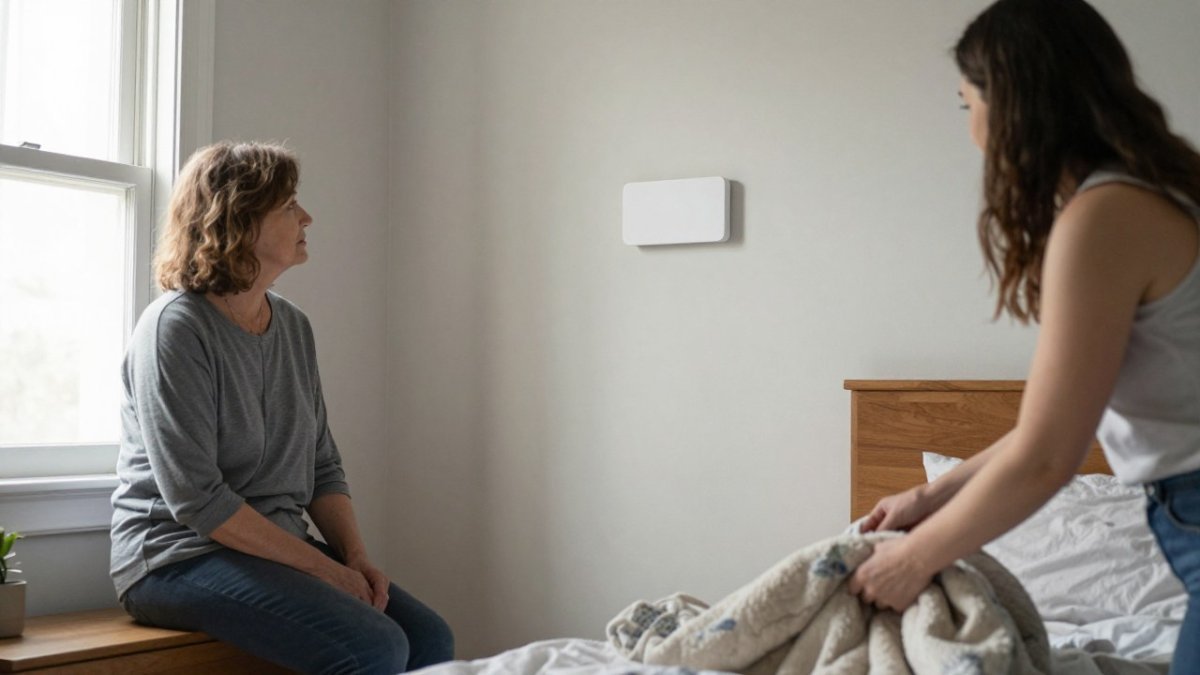
The sensor is a wall-mounted unit that does not record video. Instead, it reads how radio waves bounce off people and objects in the room.
Camera-Free and Wearable-Free: How Radio-Frequency Sensing Works
Radio-frequency sensing is a monitoring method that sends low-power radio waves through a room and interprets the reflections to detect movement, posture, and falls. It does not capture images or sound.
That distinction matters for families weighing privacy against safety. Cameras in bedrooms and bathrooms raise obvious objections, and pendants only work if the senior remembers to wear them.
Where the Sensor Goes and What It Covers
Placement drives performance. A single sensor covers one room, so room coverage is a planning decision, not an afterthought. Common placements include:
- Bedroom monitoring for nighttime falls and sleep restlessness
- Bathroom monitoring, where falls are common and cameras are unacceptable
- Living-space monitoring for daytime activity patterns
One sensor per room is typical. Hallways and stairs often need their own unit, and large open-plan spaces may need more than one.
Vayyar Care Fall Detection: Accuracy, Alerts, and False Alarms
Fall-detection systems of this type are designed to distinguish a fall from other movement, and vendors should be asked to explain how their product does so.
No fall-detection system is perfect. Radar can miss a slow slide from a chair and misread a controlled drop to the floor. Ask the vendor about validation evidence and testing before you commit.
How Fall Alerts Reach Caregivers and Staff
When a fall is detected, caregiver notifications go out through a mobile app, and in senior living settings, staff alerts can route through a nurse-call system. Remote alerts mean an adult child three hours away gets the same signal as an aide in the next room.
Set expectations early: these are fall alerts, not a guaranteed emergency response. Someone still has to act on the notification. Pair the sensor with a clear response plan, and confirm what happens if no one acknowledges an alert.
Vayyar Care Cost: Subscription, Installation, and Total Cost of Ownership
Pricing depends on quantity, service terms, and how the system is deployed. For current pricing or a quote, check the ElderLivingHub website or contact the provider directly.
Budget for several cost components, not one:
| Cost Component | What It Covers | What to Ask |
|---|---|---|
| Hardware | One sensor per room | Is the unit purchased outright, leased monthly, or included in a service bundle? |
| Subscription | Monitoring, alerts, app access, software updates | Is billing monthly or annual? Is there an activation fee or a minimum term? |
| Installation | Mounting, network setup, room calibration | Is installation included, or billed per unit or per visit? |
| Support and response | Alert routing, caregiver onboarding, replacement units | What happens if a sensor fails, is a replacement covered? |
Total cost of ownership is worth comparing carefully. Ask any provider for the full cost over the period you expect to use the system.
How to Read a Vayyar Care Quote
A quote that only lists hardware is incomplete. Ask for the following in writing:
- Per-room hardware price and whether the unit is owned or leased
- Monthly or annual monitoring fee, including any activation or setup charge
- Installation cost per unit and per visit, and whether a return visit is billed
Cost Factors That Move the Number Most
Room count is a major factor in total cost, since coverage is planned per room. Facility deployments may be priced differently, so operators should ask for pricing that fits their setup.
Other factors that move the total:
- Installation complexity, drywall mounting is straightforward; plaster, brick, or high ceilings can add labor
- Network readiness, if Wi-Fi does not reach a bathroom or bedroom, an access point or installer visit adds cost
- Integration fees, connecting alerts to an existing nurse-call system may carry a one-time integration charge
A quote that omits installation and integration may look less expensive than the full cost. Always ask for an all-in figure.
Comparing Cost Against Alternatives
Wearable pendants depend on the device being worn, while camera systems raise privacy questions in bedrooms and bathrooms. Radar sensing avoids both, though its cost structure differs and should be compared directly.
For a fuller side-by-side, see our comparison of fall detection products and our Alert1 fall detection review for a no-contract alternative. Compare 24-month total cost against 24-month total cost, with coverage and response included.
What to Ask Before You Sign
- Request the all-in 24-month and 60-month total in writing
- Confirm whether hardware is owned or leased and what happens at contract end
- Ask whether installation, network setup, and integration are included
Vayyar Care Pros and Cons for Families and Care Facilities
The honest Vayyar Care pros and cons come down to fit. For the right household, it removes the biggest failure point in senior monitoring: the senior who forgets to wear or press a device.
Strengths That Matter in Daily Use
- Wearable-free detection means nothing to charge, wear, or remember
- Camera-free monitoring protects dignity in bedrooms and bathrooms
- 24/7 monitoring runs without anyone switching it on
Limitations and Who It May Not Suit
A single sensor covers one room, so a home with stairs, long hallways, or multiple bathrooms may need several units.
Vayyar Care may not suit a senior who needs outdoor coverage, a household with unreliable Wi-Fi, or a family expecting the sensor to summon help on its own. Alerts require a response plan, since the system does not itself dispatch responders.
How Vayyar Care Compares to Other Fall-Detection Systems
This section compares radar sensing against wearables, camera systems, and other sensor-based monitors on detection method, coverage, privacy, cost structure, and failure modes.
The Four Categories at a Glance
| System Type | How It Detects | Requires Wearing | Uses Camera | Coverage Model | Main Failure Mode |
|---|---|---|---|---|---|
| Radar sensor (Vayyar Care) | Radio-frequency reflections | No | No | One room per sensor | Missed slow falls; room-count cost |
| Fall-detection watch | Accelerometer and gyroscope | Yes | No | Person-carried | Not worn or not charged |
| Pendant alert | Push button (some with fall detection) | Yes | No | Person-carried | Not worn; user must press |
| Camera system | Video analytics | No | Yes | Room or area | Privacy objections; blind spots |
| Other sensors (pressure mats, bed sensors) | Pressure or motion | No | No | Single surface or zone | Limited to one location |
Radar vs. Wearables: The Adherence Trade-Off
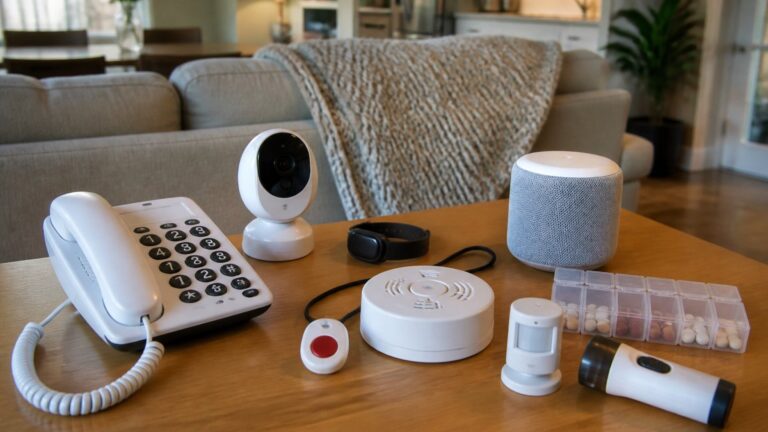
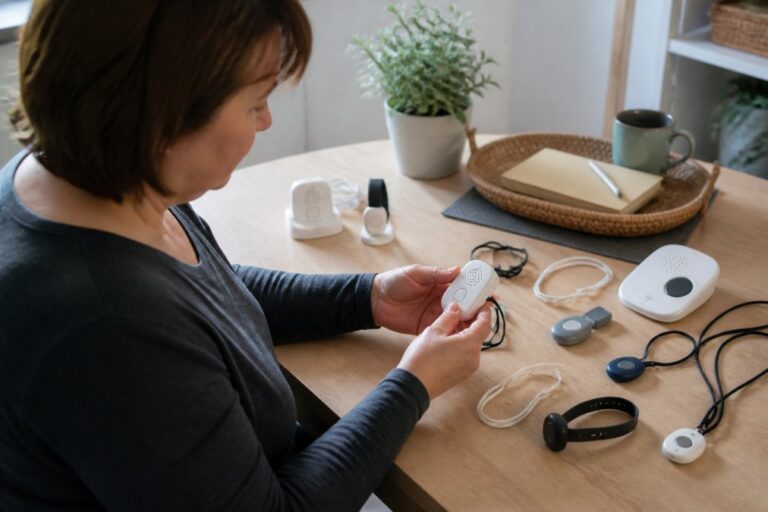
Wearables, watches and pendants, are the most familiar option and often the least expensive to start. Their weakness is adherence: a senior with early memory loss may forget to put on a watch, leave a pendant on the nightstand, or let a battery die.
Radar sensing does not require anything to be worn or charged. The trade-off is coverage: a wearable travels with the person, while a radar sensor covers one room.
Radar vs. Cameras: Privacy and Confirmation
Camera systems offer something radar cannot: visual confirmation of what happened, which helps caregivers distinguish a fall from a false alarm. But cameras in bedrooms and bathrooms are a non-starter for many families, raising consent and data-handling questions that radar largely avoids.
Radar sensing produces activity and fall data rather than images, so alerts may carry less context than visual confirmation. Pair radar with a clear response plan and, where appropriate, a two-way communication device.
Radar vs. Other Sensor Monitors
Pressure mats, bed-exit sensors, and door sensors are inexpensive and reliable for a single purpose, knowing whether someone left a bed or crossed a threshold. They do not detect falls mid-room or track activity across a space. Radar is broader: it detects falls, tracks movement, and shows changes in routine.
Detection Accuracy and False Alarms: What to Ask
Every category makes accuracy claims. The useful questions are the same across vendors:
- What is the detection method, impact-based, shape-based, or a combination?
- How are slow falls handled, a slide from a chair is harder to detect than a sudden collapse
- What is the false-alarm rate in real homes, not lab conditions?
No system is perfect. Each category has its own limitations, and the right choice depends on which can be tolerated. The right choice depends on which failure mode you can best tolerate.
Suitability by User and Setting
- Independent senior who values autonomy: a minimal radar setup in the bathroom and bedroom, or a wearable if outdoor coverage matters
- Senior with early dementia who wanders: radar in the bedroom, hallway, and exit areas, paired with door sensors
- Senior living facility: per-room radar with nurse-call integration, plus a response protocol that assigns staff accountability
For a deeper look at wearables, our guide to the best fall detection watches compares features, costs, and coverage. For a no-contract alternative, our Alert1 fall detection review covers pricing and plans.
Best for: families worried a parent will not wear a device, and facilities that need room-level coverage without cameras. Skip if: you need outdoor coverage, a system that dispatches responders automatically, or visual confirmation of an event.
Privacy, Consent, and Data Retention in Camera-Free Monitoring
Privacy is the strongest argument for camera-free monitoring, but it still requires a conversation. Resident privacy and consent should be discussed openly with the senior, not decided over their head. Explain what the sensor does, what it does not do, and who sees the alerts.
Ask the vendor three questions before signing: where is data stored, how long is it retained, and who can access it. Radar sensing produces activity data, not images, but that data still describes a person’s daily life. For a broader look at balancing monitoring with dignity, see our step-by-step guide on how to monitor elderly parents remotely.
Matching Vayyar Care to the Room and the Resident
Fit beats features. A sensor covering the bathroom and bedroom addresses the highest-risk moments, while a single unit in a hallway mostly tracks passing traffic.
A senior with early dementia who wanders at night may benefit most from bedroom and hallway coverage.
A practical starting checklist:
- List the rooms where falls are most likely
- Confirm Wi-Fi reaches each location
- Agree on who receives alerts and how fast they respond
Our Vayyar Care review goes deeper on radar-based fall detection, pricing, and our verdict if you want the full hands-on breakdown.
Next Step: Request a Vayyar Care Quote for Your Home or Facility
Choosing a fall-detection system is really a question of matching technology to a person you love, and that takes more than a spec sheet.
Aging in place works best when the safety net is invisible. Camera-free, wearable-free designs can fit that goal for some families, provided the room coverage and response plan are right.
Get started with ElderLivingHub and compare your options with confidence before you request a quote.
Frequently Asked Questions
How does Vayyar Care work without a camera or wearable?
Radar-based sensors of this type use radio-frequency sensing to detect movement in a room, and the vendor should be asked to explain how its product does this. Because it does not capture images or video, it works without a camera, and because it monitors the room rather than the person, no wearable is required. The wall-mounted sensor covers a defined area and sends alerts to caregivers or staff when it detects a fall or a change in activity.
How much does Vayyar Care cost, and is there a subscription?
Pricing depends on quantity, service terms, and how the system is set up. For current pricing or a quote, check the ElderLivingHub website or contact the provider directly. When comparing total cost of ownership, include the subscription, any activation or shipping charges, and the cost of covering each room you want monitored. For current pricing, contact the provider directly or check its website.
Does Vayyar Care detect falls in every room?
Coverage depends on how many sensors you install and how each room is laid out. Room size, walls, and furniture placement can all affect how a system performs, so ask the provider to confirm coverage before you buy. Ask the provider to confirm room coverage and installation locations before you buy, and plan for the rooms where the resident spends the most time alone.
Will Vayyar Care work with Alexa Together or a nurse-call system?
Compatibility varies by product version and by the care setting. Confirm with the provider which alert methods and integrations are supported before purchasing. Before purchasing, confirm the connectivity requirements, the alert methods, and any service plan needed to route alerts to family members or staff.